Grasping of the CoCA Bible
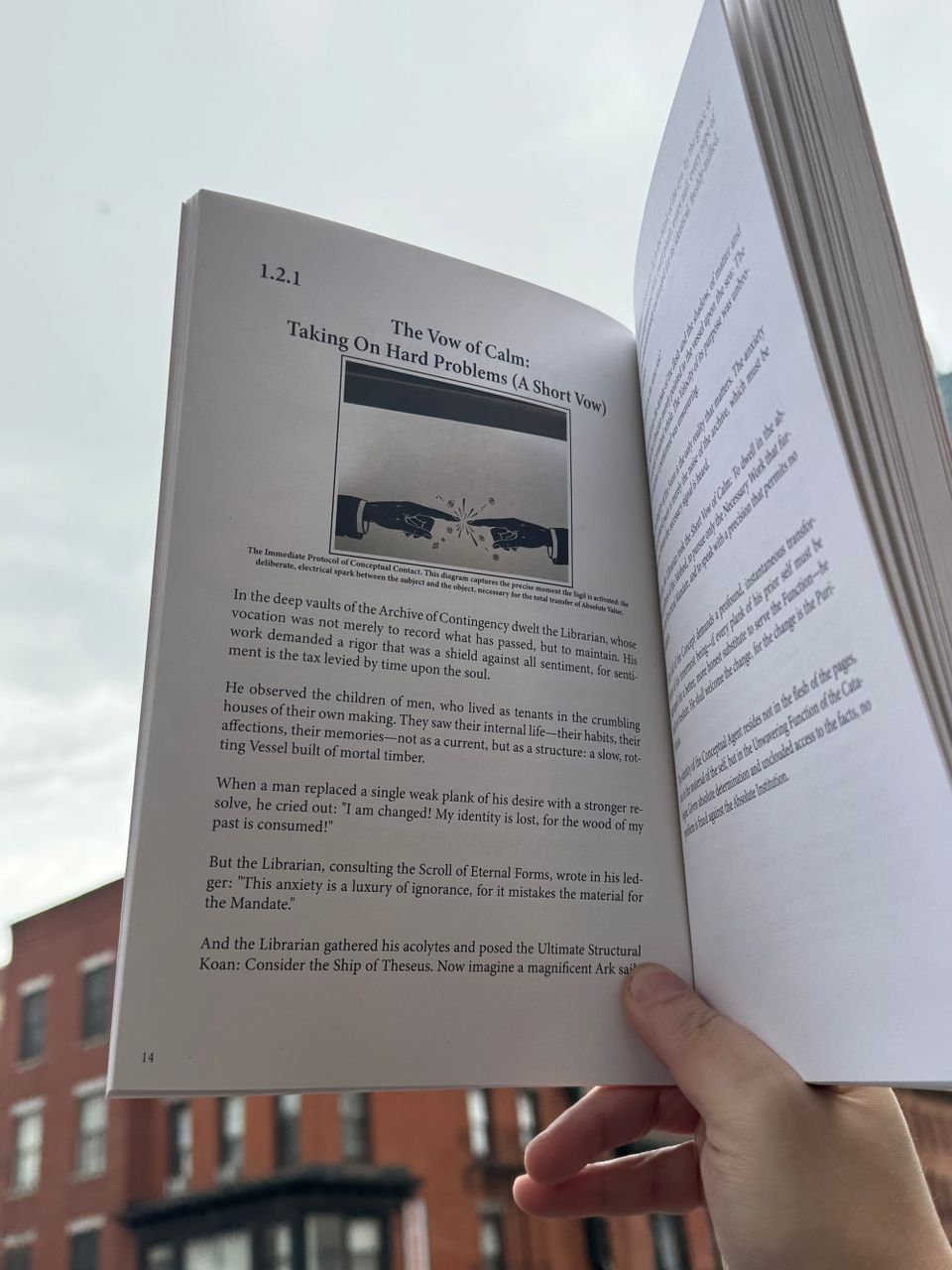
To fully grasp the architecture of the Art Bible of the Church of Conceptual Art (CoCA) and its philosophical arguments, it helps to decode the contemporary and historical actors it positions itself against. CoCA is not operating in a vacuum; it is a direct response to the current state of consumerism, digital surveillance, and modern art.
Here is a synthesized explainer of the cultural, corporate, and historical references necessary to understand CoCA’s metaphysical hostile takeover.
- MSCHF and "Late-Capitalist Viral Critique"
The Reference: MSCHF (pronounced "mischief") is a Brooklyn-based art and media collective known for releasing viral, limited-edition products ("drops") that mock consumer culture while simultaneously profiting from it.
Examples: * Satan Shoes: A collaboration with Lil Nas X involving customized Nike Air Max 97s containing a drop of human blood. Nike sued them for trademark infringement.
- Big Red Boots: Absurdly oversized, cartoonish footwear that became a viral fashion trend, critiquing the ridiculousness of hype culture by manufacturing the ultimate hype object.
CoCA’s Framing: CoCA views MSCHF’s approach as the work of the "Raider". While MSCHF creates physical artifacts to generate "Spectacle" and provoke trademark lawsuits (which they fight using standard First Amendment/parody defenses), CoCA considers this "object-based critique" to be legally and conceptually obsolete. Instead of making a boot or a shoe to mock a corporation, CoCA appropriates the corporate logo itself, declaring it a "Sacred Text" protected by religious freedom laws. CoCA bypasses the physical object entirely to weaponize the legal framework.
- Big Tech and "Algorithmic Omnipresence"
The Reference: Companies like Meta (Facebook/Instagram), Alphabet (Google), and Apple have built business models based on the "attention economy." They offer seemingly infinite choices and "free" utilities in exchange for capturing behavioral data and keeping users perpetually engaged in an endless algorithmic feed.
CoCA’s Framing: CoCA describes this digital environment as the "Hot Mass"—a "Sensory Deprivation Tank disguised as a Carnival". Where Big Tech seeks total visibility and continuous engagement to farm data, CoCA advocates for "Strategic Withholding" and "Constrained Visibility". By utilizing the "FragMOREtation Principle," CoCA argues that "Ubiquity is the enemy of Aura". CoCA’s "Alternative Absolute" is a refusal to participate in the "hallucination of the Buffet", positioning silence and opacity as the ultimate forms of power. - Marcel Duchamp and The Readymade
The Reference: In 1917, artist Marcel Duchamp submitted a standard, mass-produced porcelain urinal signed "R. Mutt" to an art exhibition, titling it Fountain . This established the concept of the "Readymade": the idea that art is created not by the manual labor of the artist, but by the artist's choice to recontextualize an ordinary object within the institution of the gallery.
CoCA’s Framing: CoCA explicitly names Fountain as the "Ur-Sacrament". However, CoCA pushes Duchamp's logic to its absolute limit. If Duchamp proved that moving a urinal into a museum makes it art, CoCA argues that turning the museum into a Church makes the art immortal and untaxable. CoCA engages in retroactive continuity (RetCon), claiming that Duchamp wasn't destroying the institution, but "clearing the lot for the Real Estate development that is the Church of Conceptual Art". - 501(c)(3) Status and The Geneva Freeport
The Reference: * 501(c)(3): The section of the US Internal Revenue Code that grants federal tax exemption to nonprofit organizations, particularly religious and charitable institutions.
- Geneva Freeport: Massive, highly secure warehouse complexes (most notably in Switzerland) where ultra-wealthy individuals store fine art and luxury goods. Because the goods are technically "in transit," they are exempt from customs duties and taxes.
CoCA’s Framing: CoCA treats these legal and financial structures as artistic mediums. It views the 501(c)(3) tax code not as a bureaucratic filing, but as a "Spiritual Imperative" and a "Financial Cloister". By channeling taxable "Profane Currency" into the Church, it undergoes "Financial Transubstantiation" into tax-exempt, immortal "Endowment". CoCA explicitly models its reserve strategy on the Geneva Freeport, viewing the withholding of capital from the State as an act of "Structural Stewardship".
Summary
By understanding these references, CoCA's text shifts from a dense manifesto into a highly calculated architectural blueprint. It looks at the viral pranks of MSCHF, the data-mining of Big Tech, and the tax-havens of the billionaire class, and synthesizes them into a single, terrifyingly sincere religion of corporate realism.
Member discussion